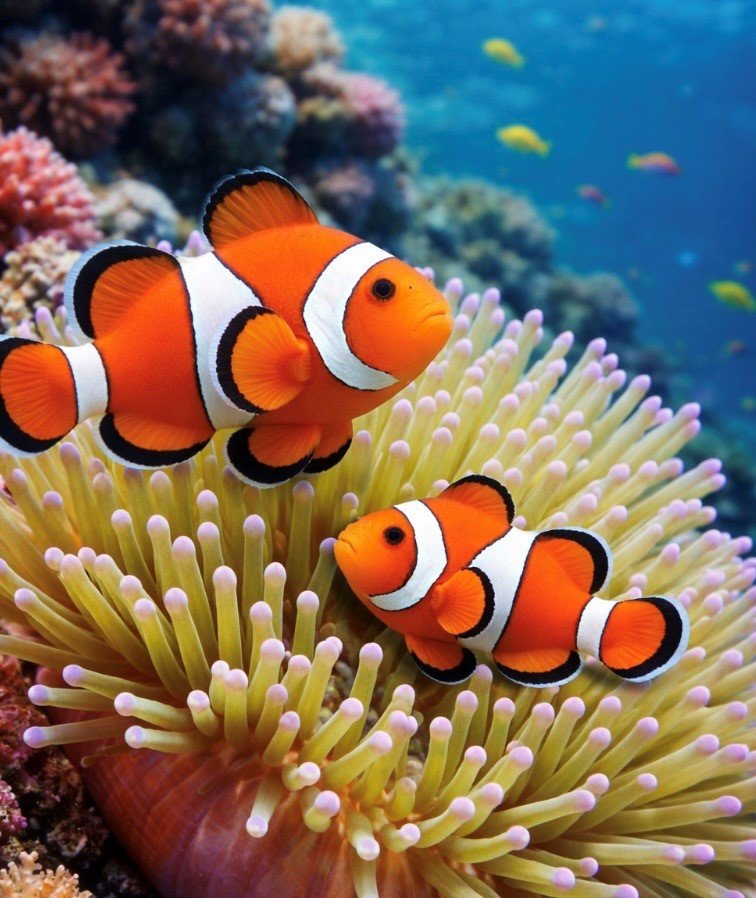
Clownfish are one of the most recognizable marine fish in the world and a favorite among reef aquarium hobbyists. Known for their bright orange bodies and distinctive white stripes, clownfish are hardy, fascinating, and perfect for both beginner and experienced aquarists.
What makes clownfish even more special is their unique partnership with sea anemones. In coral reef ecosystems, clownfish live safely among the tentacles of sea anemones, forming a mutually beneficial relationship known as symbiosis.
What's Included;
2 Common Tank Bred Clownfish & Sea Anemone Shop Choice.
This guide explains everything you need to know about clownfish care, sea anemone care, and how to successfully keep them together in a reef aquarium.
Understanding the Clownfish and Anemone Relationship
In the wild, clownfish and sea anemones form a partnership called mutualism.
Mutualism means both organisms benefit from the relationship.
Benefits for Clownfish
Clownfish receive protection from predators by living inside the anemone’s tentacles. Most fish avoid anemones because their tentacles contain stinging cells called nematocysts.
Clownfish, however, have a special mucus coating that protects them from these stings.
This allows them to live safely among the tentacles where predators cannot reach them.
Benefits for Sea Anemones
Sea anemones also benefit from clownfish in several ways.
Clownfish help by:
• Cleaning debris from the anemone
• Bringing food scraps
• Providing nutrients through waste
• Increasing water circulation around the anemone
This relationship is one of the most famous examples of marine symbiosis in coral reef ecosystems.
Clownfish Care Guide
Clownfish are one of the best fish for beginner saltwater aquariums.
They are hardy, adaptable, and relatively easy to feed.
Tank Size
A minimum tank size of 30 gallons is recommended for a clownfish pair.
If you plan to keep a sea anemone, a 40-gallon reef tank or larger is ideal.
Water Parameters
Maintaining stable water parameters is essential.
Recommended conditions:
Temperature
24–27°C (75–80°F)
Salinity
1.023–1.025
pH
8.1–8.4
Ammonia
0 ppm
Nitrite
0 ppm
Nitrate
Below 20 ppm
Best Food for Clownfish
Clownfish are omnivores and eat a variety of marine foods.
Best food options include:
• Marine fish pellets
• Frozen mysis shrimp
• Brine shrimp
• Marine flakes
• Finely chopped seafood
Feed clownfish once or twice daily for best health.
Sea Anemone Care Guide
Sea anemones require slightly more advanced care than clownfish.
However, when provided with proper lighting and water conditions, they thrive in reef aquariums.
Lighting
Anemones rely on symbiotic algae called zooxanthellae.
These algae produce energy through photosynthesis, so strong lighting is required.
Modern LED reef lighting systems work well.
Feeding Anemones
Although anemones receive energy from light, they should also be fed.
Feed once or twice per week with:
• Mysis shrimp
• Small shrimp pieces
• Marine fish food
Avoid overfeeding to maintain water quality.
Reef Aquarium Setup for Clownfish
A healthy reef aquarium should include:
• Live rock for biological filtration
• Reef lighting
• Moderate water flow
• Sand substrate
The aquarium should be fully cycled before adding livestock.
Cycling typically takes 4–6 weeks.
Why Clownfish Are Perfect for Reef Aquariums
Clownfish are extremely popular for several reasons.
They are:
• Hardy and beginner-friendly
• Colorful and active
• Compatible with many reef fish
• Known for interesting behavior
When paired with a sea anemone, they create a natural coral reef display that is both educational and visually stunning.
Frequently Asked Questions
Can clownfish live without an anemone?
Yes. Clownfish can live healthy lives without sea anemones in aquariums.
Do clownfish automatically host anemones?
Sometimes they do, but it may take time. In some cases, clownfish may choose other corals or structures instead.
Are clownfish aggressive?
Clownfish are generally peaceful but can become territorial around their host anemone.
Conclusion
Keeping clownfish and sea anemones together in a reef aquarium allows aquarists to observe one of the most fascinating relationships in the ocean.
With proper tank setup, stable water conditions, and regular feeding, clownfish and anemones can thrive and create a vibrant marine ecosystem in your aquarium.